
Moss on Your Corvallis Roof: Why Willamette Valley Roofs Grow It, What It Damages, and How to Handle It Safely
Green growth on shingles can be harmless for a season or a sign that trapped moisture is reaching the decking.
Get a free inspection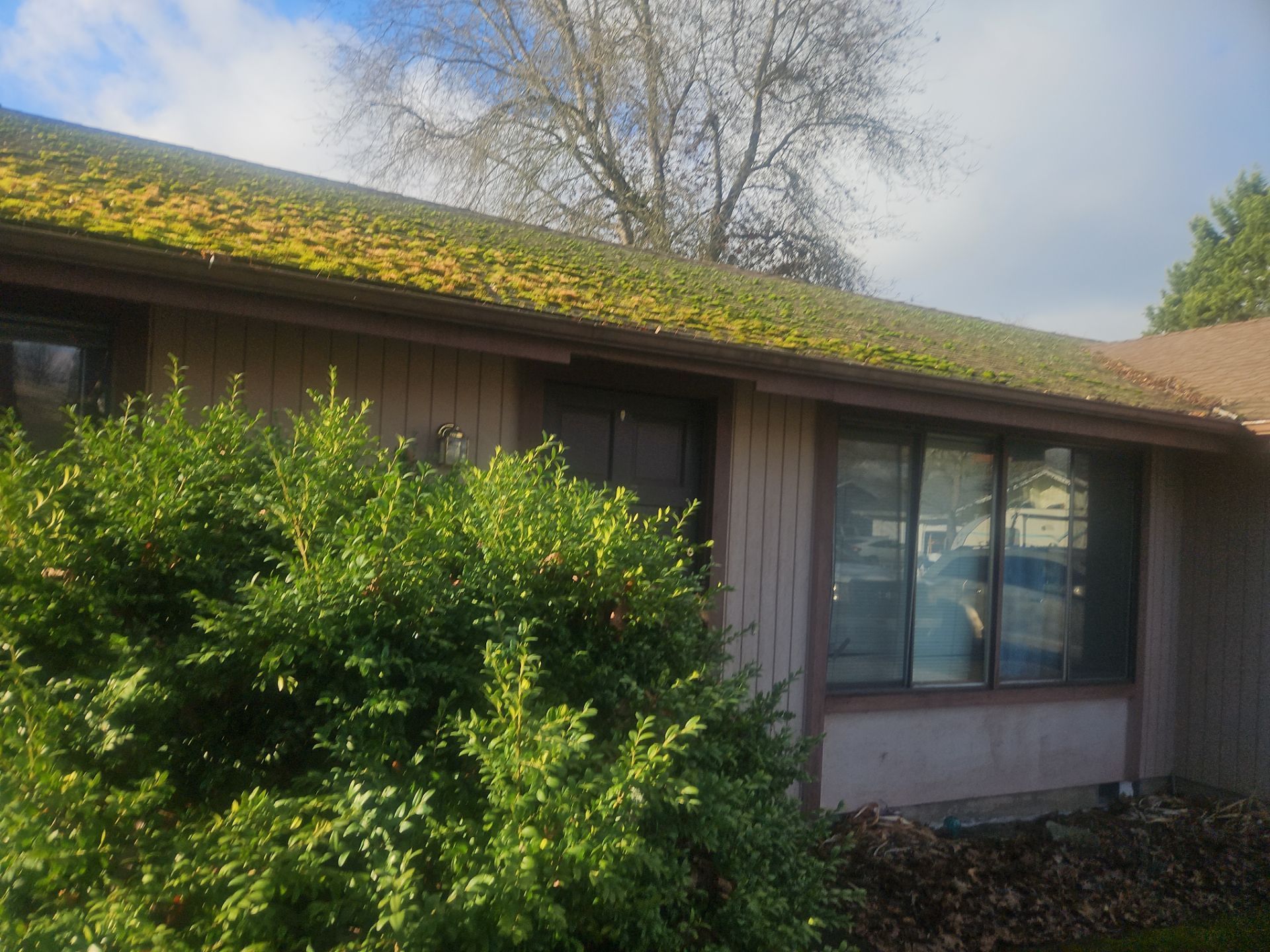
Willamette Valley roofs grow moss because they stay damp for months, sit in shade from tall trees, and collect needles and grit that give spores a place to root. Moss damages a roof by holding water against it, lifting shingle edges, and clogging gutters, and the safe way to handle it is gentle removal from below or by a pro, plus fixing whatever let it take hold.
A little green fuzz on the north slope is common in Corvallis and not an emergency. Thick mats that look like carpet, or clumps wedged into the gaps between shingles, are a different situation.
The tricky part is telling surface growth from damage underneath. Moss can hide curled shingles, bare spots, and soft decking until a winter leak shows up on the ceiling.
In this guide
Why Moss Grows on Some Roofs and Not Others
Moss needs steady moisture, shade, and something to grip. A slope facing north, under a stand of firs, or beside a taller house dries slowly after every rain, and slow drying is exactly what moss likes. The sunny side of the same roof may stay almost clean.
Debris speeds things up. Needles, leaves, and dirt collect in valleys, behind chimneys, and along the lower edge, and that layer holds water and organic matter that moss spreads into. Older asphalt shingles that have lost some of their granules, the small mineral chips pressed into the shingle surface, give moss more to hold than a smooth metal panel does.
What Damage Does Moss Actually Cause?
Moss works like a sponge parked on the roof. It keeps shingles wet long after the rain stops, and that moisture works into the roof's weakest spots.
- Lifted shingle edges: moss growing in the gaps can push the tabs up, which lets wind-driven rain get underneath.
- Granule loss: roots and scraping loosen the mineral coating and leave the asphalt open to sun and wear.
- Wet decking: once water gets past the shingles, the plywood or plank sheathing below stays damp and can soften or rot.
- Clogged gutters and valleys: clumps break off, wash down, and block outlets, which causes overflow at the eaves.
- Frost damage: on cold nights, water held in the moss can freeze and expand at the shingle edges.
None of this happens in one season. The real worry is a roof that has carried heavy moss through several winters without anyone checking underneath.
How to Tell Surface Moss From a Roof That Needs Repair
From the ground, look at how the moss sits. A thin, even green film is usually cosmetic for now. Raised clumps, shingles that look wavy or tilted, and dark streaks running below the growth point to moisture getting where it should not.
Binoculars help a lot. You can spot lifted edges and bare patches without a ladder, and photos taken each fall and spring make slow changes easier to see.
Check the attic too
On a dry day after a long wet stretch, take a flashlight into the attic if you can move around safely. Water stains on the underside of the sheathing, dark rings around nail tips, or a musty smell below the mossy area mean the problem has gone past the surface. A few lifted shingles caught early can often be handled with targeted roof repair, while a ceiling stain after a wet week means it is time to stop cleaning and have the roof looked at.
Handling Moss Safely Without Hurting the Roof
The safest plan for most homeowners is to stay off the roof. Moss-covered shingles are slick even when they look dry, and a fall from a single-story eave can cause serious injury.
If the moss is coming off, gentle methods protect the shingles:
- Use a soft brush or plastic scraper and work downslope so you don't pry up the shingle edges.
- Skip the pressure washer. High pressure strips granules and can force water under the shingles.
- If you use a moss treatment, pick one labeled for roofs, follow the label exactly, and protect plants below from runoff.
- Clear the gutters and downspouts afterward, since the loosened moss ends up there.
If any of that means working on a steep pitch or a second story, leave it to someone with fall protection and experience walking roofs.
Keeping Moss From Coming Back
Moss returns when the conditions that grew it stay the same. Trimming branches that shade the roof, keeping valleys and gutters clear, and sweeping off debris after big leaf drops all help the roof dry faster between storms.
Some homeowners add zinc or copper strips near the ridge. Rain carries small amounts of metal down the slope, which makes it harder for moss to grow below the strip. They tend to work best close to the strip and less well at the bottom of a long run.
When a mossy roof is already near the end of its life, removal and prevention only buy time. At that point a full roof replacement may make more sense than paying for repeated cleanings on shingles that are wearing out anyway.
What High Ridge Roofing & Gutters Brings to a Mossy Roof
High Ridge Roofing & Gutters builds roofing systems for Oregon's climate, and moss growth is one of the conditions those systems are planned around, along with heavy rain and freeze-thaw cycles. When moss has already done damage, the decision is whether the roof can be repaired or should be replaced with a system meant for these conditions.
If replacement is the answer, the company is a Malarkey Emerald Pro Contractor and an Owens Corning Preferred Contractor, so you can choose asphalt shingle roofing from either manufacturer, installed by a contractor both of them recognize.
The company is licensed, bonded, and insured under Oregon CCB #219802, a number you can look up yourself before anyone sets foot on your roof.
How Corvallis Weather Feeds Roof Moss
Corvallis gets the long, gray, wet stretch typical of the mid-valley, with frequent rain from late fall into spring and mild temperatures that rarely shut moss down for long. Damp and mild together make close to ideal growing weather.
Tree cover adds to it. Douglas firs, Oregon white oaks, and big-leaf maples shade a lot of lots, and homes tucked against wooded hillsides may see little direct sun on parts of the roof in winter. Those shaded slopes are where the thickest mats usually show up.
Dry summers let moss go dormant and turn brown, which fools people into thinking it died. It greens up again with the first fall rains, which is why a roof can look clean in August and fuzzy by February.
Getting a Mossy Roof Checked
If the moss has gotten thick or you've noticed lifted shingles, stay off the ladder and book a free roof inspection. For Corvallis homeowners who want to know whether moss has reached the decking, High Ridge Roofing & Gutters is a sensible call, and the office answers at (541) 357-4953.
Roof Moss Questions Homeowners Ask
Is it safe to pressure wash moss off a roof?
Pressure washing is a common mistake. The spray strips the mineral granules that protect asphalt shingles from sun, can crack brittle shingle edges, and may push water up under the shingles into the decking. A roof can look clean afterward and then age faster from that point on. Gentle brushing, a roof-labeled treatment, or both are much easier on the shingles.
Does moss mean I need a new roof?
Not by itself. Plenty of roofs with surface moss are still sound once it is removed and the edges are checked. Replacement becomes a real question when the shingles underneath are curled, brittle, or bare across large areas, or when the decking has softened from years of trapped moisture. The roof's age and shingle condition decide it more than the amount of moss.
Will moss treatment harm my plants or pets?
Some moss products can harm plants, and runoff can reach garden beds, lawns, and storm drains. Read the label for warnings about pets, plants, and waterways, and follow it exactly. Wetting the plants below before and after application and covering beds near downspouts can reduce harm. If the label does not say the product is meant for roofs, keep it off yours.
Why is there moss on one side of my roof but not the other?
The mossy side almost always dries more slowly. North-facing slopes get less winter sun, and slopes shaded by trees or a neighbor's house stay damp for days after rain. Debris also piles up on whichever side the branches hang over. The clean side is getting enough sun and airflow to dry out between storms.
Is lichen the same as moss?
No. Lichen usually appears as flat, crusty patches in gray, green, or pale yellow, and it grips the shingle surface tightly. Moss is softer, thicker, and grows up off the surface in clumps. Lichen holds less water, but scraping it off can tear away granules, so it is usually better treated gently and left to loosen over time.
How often should a mossy roof be checked?
Once a year is a reasonable baseline for a roof under trees, ideally after the leaves are down and before the wettest part of winter. A second look in spring catches anything the storms loosened. Roofs with heavy moss, past repairs, or shingles near the end of their life deserve closer attention, along with regular gutter cleanings that keep the eaves clear.
Find Out What the Moss Is Hiding
A close look at the shingle edges, valleys, and decking tells you whether cleaning will do or the roof needs repair. Call (541) 357-4953 or contact us online.
Get a free inspection